Sauron: the Dark Lord of Autism

Ash nazg durbatulûk,
ash nazg gimbatul,
ash nazg thrakatulûk,
agh burzum-ishi krimpatul.One Ring to rule them all,
One Ring to find them,
One Ring to bring them all
and in the darkness bind them.1
Introduction 🔗
This essay considers Sauron from J.R.R. Tolkien’s legendarium as a symbolic model for a particular Jungian shadow archetype, one that exerts its influence in the form of systematizing for its own sake, at the cost of all else—systematizing from a delusion that it is the highest value. The mind so preoccupied with its systems loses sight of what the systems were meant to serve.
I developed this thought as a post hoc symbolism of a tattoo I got (Figure 1). Then, I called him the shadow archetype of order, but I thought this title allows for a more specific analysis. The shadow in question is not order as such, but the autistic systematizing drive untethered from its proper relation to the world. Within the framework of Carl Jung’s shadow archetype I will explore how the Dark Lord of Autism assumes his throne.
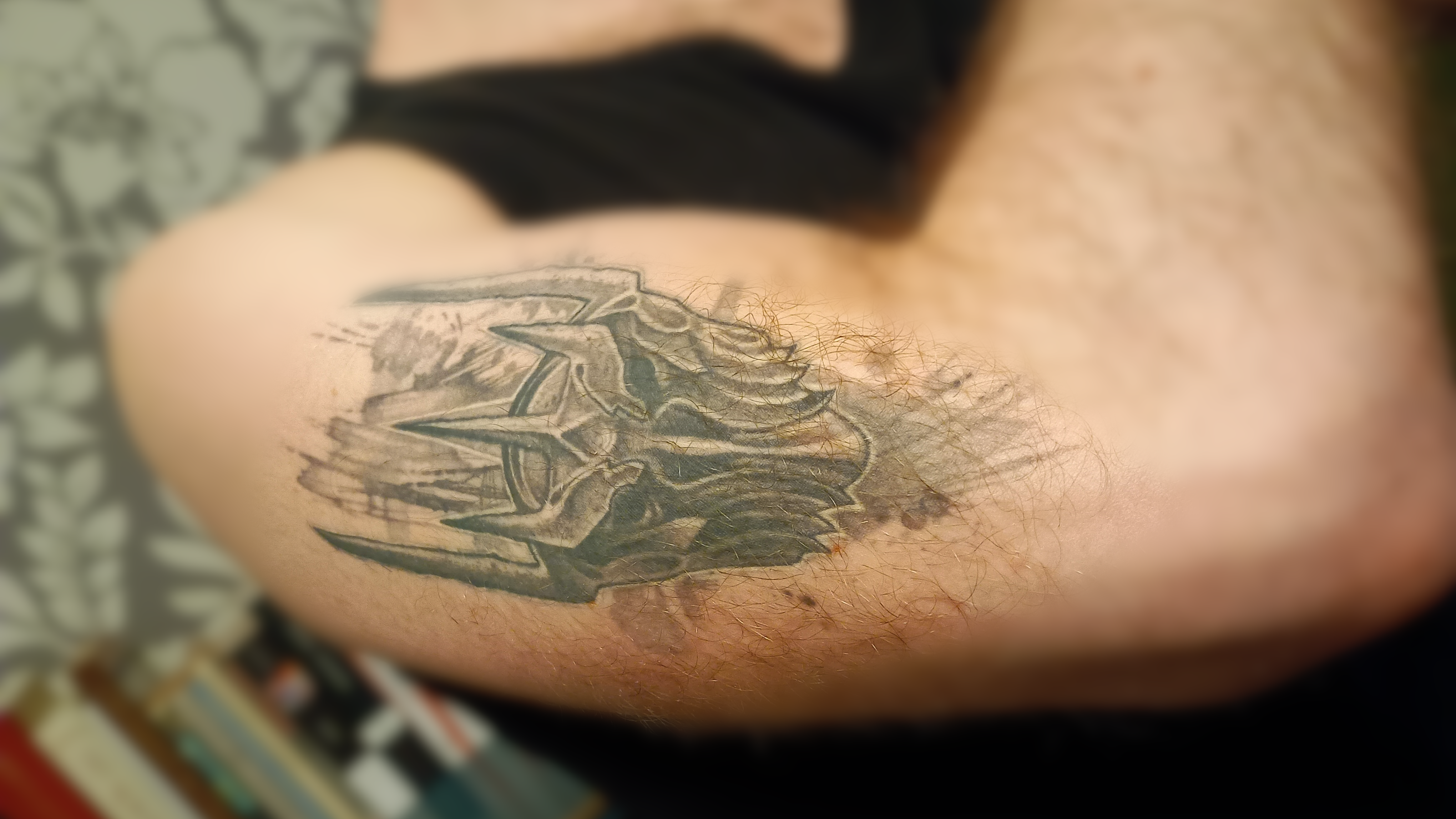
Figure 1: A tattoo of the Lord of the Rings I got in 2022.
The essay presents a background on the kind of autism I will consider, then on Sauron according to the Silmarillion, and lastly what the Jungian shadow archetype generally means. The discussion regards how the information fits together to form the thesis. After concluding the points, I give a few words on what an autist can expect by “integrating the shadow” of Sauron.
Before proceeding, I will explicitly state that this argument is a model that I am trying to apply, and obviously not what Tolkien intended the character to be symbolic of. I respect Tolkien’s works more than any other author, and apologize for any transgressions I might make.
Background 🔗
Sauron, The Angel of Engineering 🔗
For those who are unaware of who Sauron is outside the movies and a casual reading of the Lord of the Rings books, we shall consider what and who he is and how he came to be.
In the Silmarillion, Tolkien describes how the world of Arda is created. Before time, Eru Ilúvatar creates his angelic servants the Ainur. Together, they sing Arda into creation. The Ainur exist in two tiers: the primary Valar, and the secondary Maiar, who serve the Valar and thereby Ilúvatar. Sauron/Mairon (alongside Gandalf/Olórin, Saruman/Curunír, the Balrogs, and Eönwë) is of the latter.2
The Ainur gradually descend into Arda as immanent beings. Sauron’s master, the Dark Lord Melkor/Morgoth, is a luciferic Valar who rebels against creation, corrupting and destroying out of spite. Sauron is not originally a servant of Morgoth, but rather of Aulë, the Valar associated with smithing, who also is the patron of the Dwarves and Saruman’s master before he too embraces corruption. Sauron means “the Abhorred” whereas his original name was Mairon meant “the Admirable”. Ilúvatar’s creation contains both beauty and order, and Mairon partook in the design. Morgoth rebelled as he could never be omnipotent and a creator as a servant of Ilúvatar, and Sauron must have seen some opportunity to enable who he was by following Morgoth: power to dominate and manage his own order.3
Sauron’s villainy and noteworthiness occur in the Second Age and Third Age of Arda, which follows Morgoth’s total defeat during the War of Wrath and his permanent banishment.4 At the end of said war, Eönwë offers Sauron the chance to repent before the Valar. Unwilling to face humiliation, Sauron hides away in Middle-earth.
The Valar’s direct influence over Middle-earth lessens over the ages. Sauron observes the rise of Men and, from his perspective, they are not realizing their potential. He sees himself as a more efficient manager and ruler. He carries some of Morgoth’s spite of creation, but the larger motivation stems from Sauron’s essence as a craftsman. He is an angel of engineering and a master at crafting long, elaborate plans. Not a pure puppet master, but a meticulous architect of systems. His design includes the trade networks of Rhûn, the Nazgûl as agents and generals, the allegiances with Human and Dwarven races,5 towering architecture, and permanent sieges.
The One Ring is Sauron’s ultimate design because it allows him to extend himself. It was created by Sauron pouring his will into it; it is him and he is it. The central power of the Ring is that it amplifies the essence of the ring-bearer; their selfhood. It corrupts by turning people into shadows of themselves; still with their will to embrace who they are, but with the influence of a subconscious misorientation towards evil. This is both how Gandalf and Galadriel explains what would happen should they accept it, and the endearing vision the Ring creates for Sam, where he sees the plains of Gorgoroth as a blossoming bed of flowers.6
The Autist Mind 🔗
Autism comes from the Greek root αὐτό (auto, “self”). When I say autism, I refer to a male autism that relates to systematizing, “the drive to understand a system and to build one”, and the drive to impose order; the extreme male brain.7 Obviously, this is not autism as defined by DSM-5,8 which would include the social persona, but instead a narrow cognitive archetype.
The autist mind shuns the unpredictable and [seemingly] illogically, is self-absorbed in his perspective, and thrives under sensible laws.9 His work is his order and his order is his work.
The autist mind encounters problems when he faces the uncontrollable and incomprehensible. Social situation are ones he can’t always avoid and it leads to great pain to have to tolerate the rampant disorder and deceitful language.
But avoidance, whether the social situations or the nature of his (subconscious) mind, will have him fleeing forever. He can theoretically escape the former, but never the latter. Realistically, there will be friction.
After conflict, both those that wish him well and ill tend to inform him that he is self-absorbed. He might possess the intellect to enough to tell that this is true, and will start to discover the predictability of his tendencies; seeing the walls of his prison. But this drive is very powerful, and more importantly an essential part of who he is.
The Jungian Shadow Archetype 🔗
Jungian theory concerns itself with the symbolism inherent in human history and the collective unconscious: “Mental forms whose presence cannot be explained by anything in the individual’s own life and which seem to be aboriginal, innate, and inherited shapes of the human mind.”10
Regardless of whether the symbols originate from the mind or are common phenomena, they are apt frameworks for understanding how the world functions. The archetype is a symbol of a particular personality defined by traits. Examples thereof include the Hero, the Rebel, the Lover, and plenty of the Tarots and Zodiacs. These are larger than life and appear in essence across time and space, metaphysical features. Jung writes that they only come alive to the one who patiently tries to discover why and how they are meaningful.
The Jungian shadow is symbolism of the idea that the subconscious houses a portion of one’s nature that the conscious ego is unaware of, represses, or denies. The shadow is a psychological character with a drive that we deem incompatible with our self-image. It is important to not conflate shadow and negativity: the shadow contains subconscious powers, but also unlived potential. It is not as dramatic as within Dr. Jekyll, and works as a spectrum of influence based on the clarity of the consciousness: think of the absent-minded state:
This subliminal material can consist of all urges, impulses, and intentions; all perceptions and intuitions; all rational or irrational thoughts, conclusions, inductions, deductions, and premises; and all varieties of feeling. Any or all of these can take the form of partial, temporary, or constant unconsciousness.
—Carl Jung11
Jung thought it imperative to integrate the shadow self into the conscious self, moving towards a pure version of the present self. Individuation, the development of the individual from the universal, requires one to integrate the shadow. The initial act is to understand the depths of one’s psychological being: what one is. By charting the powers stirring in the dark, they can gradually be understood. Jung’s co-author, M. L. von Franz maintained that the psychic growth could not “be brought about by a conscious effort of willpower,” and symbolized the process as the growth of a tree:
The seed of a mountain pine contains the whole future tree in a latent form; but each seed falls at a certain time onto a particular place, in which there are a number of special factors, such as the quality of the soil and the stones, the slope of the land, and its exposure to sun and wind. The latent totality of the pine in the seed reacts to these circumstances by avoiding the stones and inclining toward the sun, with the result that the tree’s growth is shaped. Thus an individual pine slowly comes into existence, constituting the fulfillment of its totality, its emergence into the realm of reality. Without the living tree, the image of the pine is only a possibility or an abstract idea. Again, the realization of this uniqueness in the individual man is the goal of the process of individuation.12
We can thus influence the growth by removing detecting and removing obstacles that keep us from self-realization. The nature of the internal obstacles in the subconscious are not random, but they are often uncontrollable and thereby often leads to mistakes. Ignoring the shadow feeds its power and influence over our actions, which is often dangerous. It is to submit to possession, to live with the wraith within, to bow before the necromancer, in the land of Mordor, where shadows lie.
Discussion 🔗
Sauron is the shadow archetype of the autistic systematizing drive because he is not properly integrated and understood. This results in industrialization, managerial madness, and open war on harmony.
The autist cannot escape his subconscious. Sauron cannot stop crafting his masterwork. It is likely why he followed Morgoth, and it explains his return to his ways instead of repenting before the Valar—the autist avoids confrontation with his nature following social fallout. The shadow subsequently and gradually grows.
Low empathy enables the effectiveness of Sauron’s order. It is the autistic mechanical mind that acts out tyranny to maintain its order. In D&D alignment, Sauron is the archetypal lawful evil. The code of his craft is absolute, and the evil consequences for others are his means to achieve his design, not the goal… unlike Morgoth.
In a thermodynamical sense, to create order around oneself is to export disorder elsewhere.13 Thus, as Sauron’s empire expands, he has to erode nature to extract the fuel for the drive, and destroy the resisting forces of the Free Peoples.
Within this framework, Sauron’s hatred of the Elves reflects how he is spiteful of their capacity to enjoy the beauty of Ilúvatar’s creation. Elves sing, dance and laugh; Sauron is a slave to his own design and consumed by his work. He cannot comprehend their spontaneous social structure, and sees only their opposing force. This is quite like the autist who sees social situations as a minefield of consequences, and who might feel envious of the ease with which others navigate social life. The autist might appreciate the Machiavellian means to manage such situations, and will see only the obstacles and subjects to steer—mirroring the events of Middle-Earth.
The panic that seizes Sauron when the One Ring is on the move but outside his reach shows how precarious his order and systems are. Sauron controls things not because he can, but because he must. His systems are rigid and require his force to maintain; Barad-dûr implodes as his essence is shattered; the orcs scatter without their master.
Reuniting with the One Ring is his greatest desire as it would allow him to unite with a lost part of his will, and thereby to amplify his self (αὐτό). The One Ring is the actualizer of one’s autistic potential, and Sauron is the true master of this art, hence the Ring only serves him. It is a systematizing engine that turns the self further inward unto total collapse: the self becomes the system, the systems demands the self, and the feedback loop destroys both. He wears the Ring; the Ring wears him; their destiny of destruction are one.
The self-absorption of Sauron’s mind makes him oblivious to this. His demise lies in not accounting for that anyone would consider destroying the Ring. Evil bringing about its own destruction is central to Tolkien’s thought. The Hobbits are motivated not by systems, but of friendship, loyalty and their Shire. Like with the Elves, they exist as a blindspot in the shadow of Sauron’s self.
Another autistic aspect that fits Sauron is that of the persona, the social mask commonly worn by autists. As a shape-shifter and deceiver, who Sauron is deep down is kept from us, and it is only shown in his grand design. The persona would in this case be intentionally worn by the dark enemy. Since this parallel was not what my original symbolism entailed, I will not elaborate further on it.
The archetypal force of Sauron is neither good nor evil in itself—it is neutral and may be used for either. Mairon, before his corruption, sang Arda into beautiful order as a servant of Aulë. This is the integrated shadow: the same systematizing drive in its proper relation to the world, building rather than consuming. Mairon exists within Sauron as the unlived potential his order can create. As Mairon his magic creations would be awe-inspiring, but it lives in a sublimated repression in the mind of a sorcerous tyrant-slave in service of control.
Sauron’s presence in Arda cannot be suppressed. Even when his physical body is destroyed and his shadow is dispersed, he endures. In a symbolic sense, it reflects the power he represents, and that will affect kingdoms of man, within the legendarium and in our world.
Conclusion 🔗
Seen like this, the Ring verse speaks not only to the other ring-bearers and the Free Peoples of Middle-earth, but envelops Sauron himself. He too is brought and bound; one Ring to Rule them all, including its maker14. The amplification of the will and power of the self to the point of implosion. The uncontrolled drive of the shadow archetype is self-serving, and cares little for its host.
The high-functioning autist can see past the rigid matrix of their thoughts; they can engineer their systems to work for them, rather than possessing the individual. They can see their limits and learn to love how their systematic obsession wants to drive them. But in Tolkien’s view, evil could only corrupt and never create15—this redemption was impossible for Sauron as long as he earned that name. The realized shadow does not build Mordor.16 It builds a peaceful Shire. The neglected shadow scours it.
People are not tools for one to manipulate; they are natural components of the social system one must learn to coexist with. Harmony is the trackless path of passive action. Be like Mairon, self-less creator of order. The autist that masters this art can systematize forever more.
Jung wrote that “one can perceive the specific energy of archetypes when we experience the peculiar fascination that accompanies them.” This is what subconsciously formed my awe of Sauron, and thereby led me to imparting my shadow icon on my arm as a reminder of what I need to stray from. I aspire toward a future where Mairon can sing a duet with Finrod Felagund.
Important to emphasize is that psychology is limited in what it can offer a person. It can be useful when understanding the mind, but limited in discovering the levels of being beyond the mind. Both prenatal factors and experiences influence how the personality develops, but it does not get you far to understand yourself only through the mind. Spirit and the physical body are synergic with the mind, and each can teach lessons on how the other two operate. Obsessing about personality is the most shallow ontological study.
Even when the autistic shadow of Sauron has been properly integrated, the autist is still likely to find complications, socially especially. But consider the inverse case of embracing the Dark Lord…
On then, ye autists. Master your systems, lest they master you. Surf the negentropic current through the Kali Yuga.
J. R. R. Tolkien, The Lord of the Rings (1954). ↩︎
J. R. R. Tolkien and Christopher Tolkien, The Silmarillion (1977). ↩︎
Tolkien and Tolkien, The Silmarillion. ↩︎
Until Dagor Dagorath, Tolkien’s version of Armageddon. ↩︎
During the plot of the Hobbit, Gandalf explains his worries of a potential alliance between Smaug and Sauron. Tolkien, The Lord of the Rings. ↩︎
Tolkien, The Lord of the Rings. ↩︎
Simon Baron-Cohen, The Essential Difference (2012). ↩︎
American Psychiatric Association, Diagnostic and Statistical Manual of Mental Disorders: Fifth Edition (2022). ↩︎
Baron-Cohen, The Essential Difference. ↩︎
Carl Gustav Jung, Man and His Symbols (1964). ↩︎
Jung, Man and His Symbols. ↩︎
Jung, Man and His Symbols. ↩︎
See Erwin Schrödinger, What Is Life? (1944). Also, section 3 of one of my video essay: https://youtu.be/EoGK0wT03LU?si=FbxRKjNsjEMHHM3X&t=349 ↩︎
The Ring is inscribed with Sauron’s very own words, the same words that bind him. ↩︎
A recurring theme of his works. Most direct in how Melkor doesn’t posses the Secret Fire, and is unable to create life. His evil creatures are morphed in mockery of existing life-forms: Orcs from Eleves, and Trolls seemingly based on the Ents. ↩︎
Amusingly, Mordor sounds like “more order.” ↩︎